
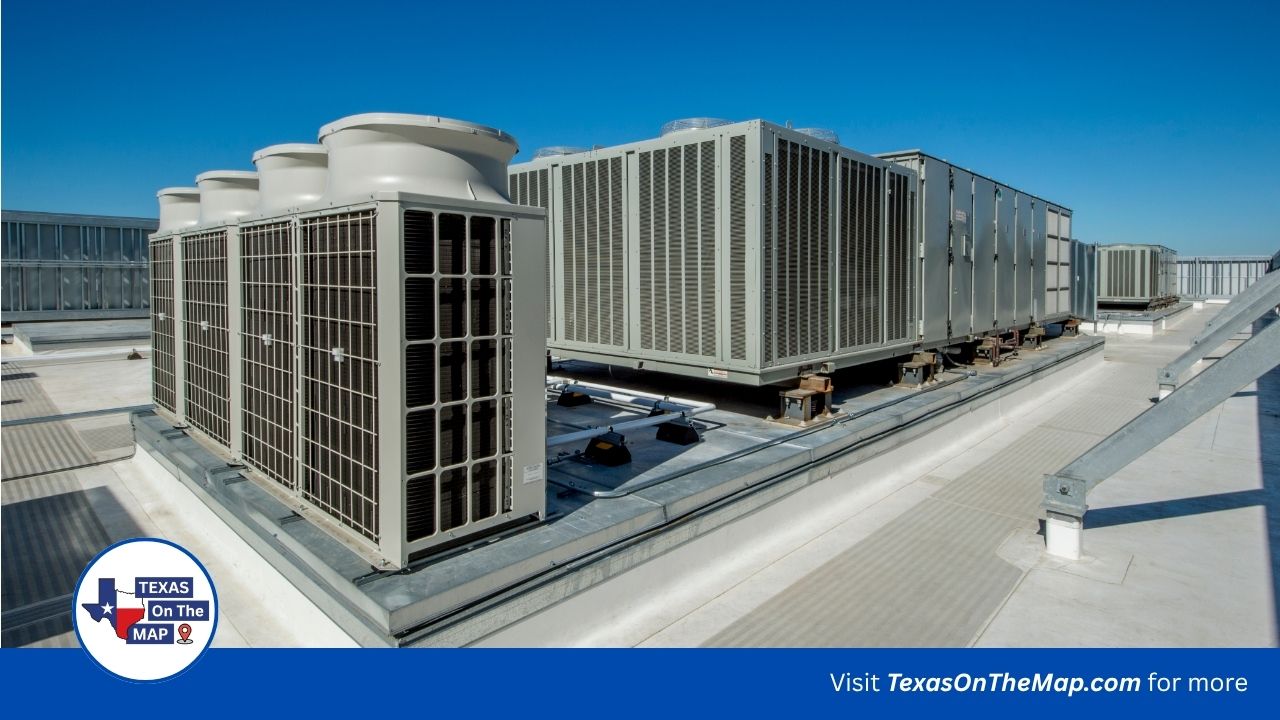
Did you know that commercial HVAC Houston systems account for 40 to 50% of your entire building's total energy consumption? That is not a small number.
Yet most Houston business owners sign contracts, pay invoices, and never once question whether they are getting real value. I get it. HVAC feels complicated. But after breaking it all down, I want to share what the industry quietly hopes you never find out.
The Houston Heat Is Not Your Biggest Problem
Houston summers are brutal. Everyone knows that. But the real threat to your business is not the heat outside. It is an aging or poorly maintained commercial HVAC system quietly draining your wallet from the inside.
The global commercial HVAC market is valued at $85.4 billion in 2026 and is projected to reach $154.9 billion by 2035, growing at a steady CAGR of 6.84%. Houston sits right at the center of this boom, with strong commercial construction growth and rising demand for smarter, energy-efficient cooling solutions. That means more contractors, more options, and, honestly, more chances to make a bad decision if you are not careful.
What Most Contractors Will Not Tell You
Here is the truth most commercial HVAC contractors in Houston skip over during a sales call.
First, size matters more than brand. An oversized system short-cycles, meaning it turns on and off too frequently. That causes faster wear and higher bills. An undersized one never truly cools your space. Always ask your contractor to perform a proper load calculation before recommending any unit.
Second, maintenance contracts save real money. A commercial HVAC maintenance contract in Houston typically covers scheduled inspections, filter changes, and early fault detection. Skipping this is like skipping oil changes on a truck. It will cost you far more later.
Third, not all contractors are equal. Always verify that your Houston commercial HVAC company is licensed, bonded, and insured. Ask about NATE certification. Ask which brands they are authorized to service and warranty. These are not small details. They protect you legally and financially.
Real Costs You Should Know in 2026
Let me give you actual numbers. For a commercial HVAC installation in Houston, a 1,000 square foot building typically costs between $6,000 and $12,000. A central air conditioning unit alone for a 2,000 square foot commercial space runs $3,000 to $5,000 or more.
Ductwork adds another $1,000 to $5,000, depending on your building layout. For larger commercial properties, installation can average $15 to $30 per square foot, meaning a 10,000 square foot office building could run between $150,000 and $300,000.
For commercial HVAC repair in Houston, TX, emergency calls, especially after hours, carry premium rates. A 24/7 emergency commercial HVAC in Houston service will solve your crisis fast, but budget for it. Routine repairs handled through a maintenance plan will always cost less than emergency callouts.
Commercial HVAC replacement in Houston for a full system can range widely. A basic rooftop unit for a mid-size office building starts around $10,000 and scales significantly with building complexity and energy efficiency ratings.
Energy Efficiency Is No Longer Optional
Energy-efficient commercial HVAC Houston options are not just a green talking point anymore. They are a direct line to cutting operating costs. Modern systems with smart thermostats, variable speed drives, and zone controls can reduce energy consumption dramatically.
Variable Refrigerant Flow (VRF) systems, in particular, continue to dominate the commercial HVAC market in 2026 thanks to exceptional efficiency and zoning flexibility. For any HVAC system for office buildings in Houston, upgrading to a high-efficiency unit pays for itself over time through lower monthly utility bills.
Notably, according to ACEEE analysis, 70% of medium-sized commercial buildings still lack an energy management system, and 85% of small commercial buildings have yet to adopt one. If you fall into either category, 2026 is the year to change that.
If you also need comprehensive support beyond just HVAC, I recommend exploring commercial building services in Houston, TX, for integrated mechanical, electrical, and facility management solutions that keep your entire building running at its best.
How to Choose the Right Contractor
Choosing the right commercial HVAC contractor in Houston comes down to a few non-negotiables. Look for documented experience with industrial HVAC in Houston or large commercial systems similar to yours. Ask for references. Check Google reviews and verify their standing with the Texas Department of Licensing and Regulation.
The best commercial HVAC contractors will offer a free site assessment, a transparent written quote, and a clear maintenance plan. If a contractor rushes you or avoids answering direct questions, walk away.
Frequently Asked Questions
How often should a commercial HVAC system be serviced in Houston?
Commercial HVAC systems should be serviced at least twice a year. Schedule one inspection in spring before the cooling season and one in fall before the heating season. Houston's extreme humidity makes this even more critical than in drier climates.
How long does a commercial HVAC system last?
The average lifespan of a commercial HVAC system is 15 to 20 years. Regular maintenance through a professional commercial HVAC maintenance plan can push that toward the higher end of the range.
What are the signs my commercial HVAC Houston system needs repair?
Watch for unusual noises, inconsistent temperatures across zones, poor airflow, rising energy bills, or unpleasant odors. Any of these signals means you should call a commercial AC repair Houston technician right away before a small issue becomes a full system failure.
How much does commercial HVAC cost in Houston, TX?
Costs vary by system size and building complexity. Installation for smaller buildings starts around $6,000. Full system replacements for larger commercial properties, especially those with advanced high-efficiency configurations, can exceed $50,000.
What is the difference between commercial and residential HVAC?
Commercial HVAC systems are designed for larger spaces, handle far higher usage demands, and use packaged rooftop units rather than split systems. They feature multiple thermostats for zone control, complex drainage systems, and modular components that allow upgrades without replacing the entire system. Residential HVAC systems are simpler, smaller, and more affordable to maintain, but they are simply not built for commercial-scale demands.